

Hiszpański blog
100 rocznica śmierci geniusza architektury Antonio Gaudiego
10.09.2026 13:137 czerwca 1926 roku starszy, siwy mężczyzna w wygniecionym garniturze zostaje potrącony przez tramwaj na Gran Via w Barcelonie. Nie ma przy sobie dokumentów, nie ma pieniędzy, guziki ma pozapinane niedbale, w kieszeniach same okruchy chleba i garść orzeszków, bo tak zwykł jadać. Taksówkarze odmawiają zabrania go do szpitala, bo wygląda na bezdomnego żebraka, a nie na kogoś, kto zapłaci za kurs. Ostatecznie trafia do szpitala dla najbiedniejszych. Dopiero następnego dnia ktoś go rozpoznaje: to Antoni Gaudí, najsłynniejszy architekt Katalonii, twórca Sagrada Familii. Przyjaciele chcą go przenieść do prywatnej kliniki, na lepsze łóżko, do lepszych lekarzy. On odmawia. Mówi, że jego miejsce jest tu, wśród biednych. Umiera trzy dni później, 10 czerwca, a na jego pogrzeb w krypcie Sagrada Familii schodzą się tłumy.
To jest dokładnie ten rodzaj historii, po której klasa nagle robi się cicho. I dobry powód, żeby w tym roku wpuścić Gaudiego na lekcje, bo 2026 to akurat setna rocznica jego śmierci, i nie tylko na hiszpańskim, choć tam oczywiście też, najlepiej.
Rok podsuwa temat na tacy również z innego powodu: w lutym na szczycie Sagrada Familia zamontowano ostatni element słynnego krzyża i bazylika osiągnęła docelową wysokość 172,5 metra, stając się najwyższym kościołem świata, a w czerwcu odbyła się uroczysta inauguracja Wieży Jezusa Chrystusa z udziałem papieża Leona XIV. Sto czterdzieści cztery lata budowy i wreszcie koniec, na oczach uczniów, którzy mogą to śledzić w czasie rzeczywistym.
Dlaczego Gaudí, a nie kolejna prezentacja o barokowych kościołach
Bo to postać, która broni się sama. Nie trzeba go sprzedawać uczniom jako "ciekawostkę", wystarczy pokazać zdjęcia. Budynek, który wygląda, jakby stopił się w upale i zastygł w tej pozie (Casa Milà, którą sami barcelończycy ochrzcili "La Pedrera", czyli kamieniołom, bo uważali ją za brzydką i niedokończoną, dziś to jedna z wizytówek miasta). Balkony przypominające maski i czaszki (Casa Batlló). Park, w którym ławka jest jednocześnie rzeźbą, mozaiką i miejscem, gdzie każdy chce usiąść (Park Güell). I wreszcie świątynia, którą budowano dłużej niż niejedno państwo istniało w swoich granicach, bo prace ruszyły w 1882 roku, a Gaudí od pewnego momentu wiedział, że jej nie dokończy, i budował mimo to.

Nie każdy się zresztą zachwycał. George Orwell, który w czasie wojny domowej mieszkał w Barcelonie, napisał w "Homage to Catalonia", że Sagrada Familia to jeden z najbrzydszych budynków, jakie widział na świecie, i dodał z przekąsem, że anarchiści, gdy mieli szansę, powinni ją wysadzić, ale nie zrobili tego z szacunku dla sztuki. To dobry materiał na lekcję o tym, że gust bywa subiektywny nawet u pisarzy, których się szanuje.
To jest dokładnie ten rodzaj biografii, który działa na wyobraźnię nastolatka: ekscentryk, wegetarianin, mistyk, geniusz, który całe życie podporządkował jednemu projektowi, a przy tym praktycznie nie zostawił po sobie rysunków technicznych, bo wolał budować modele z drutu i workami z piaskiem niż rysować na papierze. Powtarzał, że linia prosta należy do człowieka, a krzywa do Boga, i całą Sagrada Familię zaprojektował tak, żeby w niej nie było ani jednej prostej ściany. Nazywano go "Bożym architektem", i to nie na wyrost: w kwietniu 2025 roku papież Franciszek uznał heroiczność jego cnót, dzięki czemu Gaudí nosi teraz tytuł Czcigodnego Sługi Bożego, czyli jest formalnie w procesie beatyfikacyjnym, krok od tytułu błogosławionego. Rzadko się zdarza, żeby architekt był realnym kandydatem na ołtarze.
Nie tylko hiszpański: pomysły na inne przedmioty
Matematyka i geometria. Gaudí uczył się kształtów od natury, paraboloidy hiperboliczne, helikoidy, katenoidy, czyli te same krzywe, które powstają, gdy zawiśnie swobodnie zwisający łańcuch. Do dziś w muzeum Sagrada Familia stoi taki model: sznurki z małymi woreczkami śrutu na końcach, zawieszone pod sufitem, a nad nimi lustro, bo Gaudí projektował łuki krypty w Colonii Güell dosłownie do góry nogami i podglądał w odbiciu, jak będą wyglądać postawione na ziemi. To gotowa lekcja o tym, po co w ogóle uczyć się geometrii nieeuklidesowej: bo dzięki niej budynek stoi bez podpór, sam z siebie. Sam mawiał: "Architekt przyszłości będzie opierał się na naśladowaniu natury, bo to najbardziej racjonalna, trwała i ekonomiczna ze wszystkich metod" ("El arquitecto del futuro se basará en la imitación de la naturaleza, porque es la forma más racional, duradera y económica de todos los métodos").
Biologia. Gaudí powtarzał, że jego mistrzynią jest natura. Podobno o drzewie rosnącym obok jego pracowni mówił wprost: "To drzewo blisko mojej pracowni, ono jest moim mistrzem" ("Este árbol cercano a mi taller, ¡este es mi maestro!", cytat z oficjalnej strony Sagrada Familia). Kolumny bazyliki rozgałęziają się jak drzewa, dach przypomina grzbiet gada, wieże imitują formy roślinne. Świetny punkt wyjścia do rozmowy o biomimikrze, czyli projektowaniu inspirowanym naturą, temat równie aktualny dziś, co sto lat temu.
Fizyka. Statyka łuku katenoidalnego, rozkład sił, dlaczego kopuła się nie zawala. Można to pokazać na modelu z łańcuszka i lusterka, dosłownie odtwarzając metodę samego Gaudiego. Zapytany, dlaczego stosuje pochylone kolumny, odpowiedział podobno: "Z tego samego powodu, dla którego zmęczony wędrowiec, gdy się zatrzymuje, podpiera się pochyloną laską, bo gdyby postawił ją pionowo, nie odpocząłby" ("Por la misma razón que el caminante cansado, al parar, se apuntala con el bastón inclinado, ya que si lo pusiera vertical no descansaría"). Prosty obraz, a tłumaczy całą ideę statyki lepiej niż niejeden podręcznik.
Chemia i materiałoznawstwo. Trencadís, czyli technika mozaiki z potłuczonych kafelków i resztek ceramiki, to w gruncie rzeczy lekcja o recyklingu sprzed stu kilkudziesięciu lat. Krzyż na szczycie Sagrada Familia pokryto białą, szkliwioną ceramiką i szkłem właśnie po to, żeby był widoczny z każdej strony miasta.
Religia i etyka. Gaudí pod koniec życia mieszkał praktycznie w warsztacie przy budowie, żebrał o pieniądze na dalsze prace i mawiał, że jego klient (czyli Bóg) się nie spieszy. Znana jest też jego myśl: "Piękno jest blaskiem prawdy" ("La Belleza es el resplandor de la Verdad") oraz zdanie ze strony poświęconej jego duchowości: "Wszystko, co nie jest troską o ludzi, i to na każdym poziomie, jest czczą gadaniną" ("Todo lo que no sea velar por las personas, y en todos los órdenes, es palabrería pura"). Dobry punkt wyjścia do rozmowy o tym, czym jest poświęcenie się idei większej niż własne życie, bez patosu, bo materiał sam broni się faktami.
Historia i WOS. Katalonia, modernizm katalońskiego przełomu wieków, kontekst polityczny budowy tożsamości narodowej przez architekturę, a przy okazji świetny pretekst do rozmowy o tym, jak długo trwają wielkie projekty publiczne i dlaczego czasem warto myśleć w perspektywie pokoleń, a nie kadencji.
Język hiszpański. Oczywiście teksty o Barcelonie, słownictwo architektoniczne, materiały wideo z tegorocznej inauguracji wieży, a przy okazji świetny temat do rozmowy o Katalonii i jej odrębności językowej i kulturowej.
Jak to wykorzystać bez robienia z tego kolejnej "prezentacji o zabytku"
Zamiast klasycznego referatu można dać uczniom zadanie: zaprojektuj coś, co udaje kształt naturalny, ale ma pełnić realną funkcję konstrukcyjną. Albo: znajdź w najbliższej okolicy budynek, który celowo łamie zasadę linii prostej, i wytłumacz po co. Albo po prostu pokazać zdjęcia przed i po ukończeniu wieży w tym roku i zapytać: czy warto było budować sto czterdzieści cztery lata coś, czego twórca nigdy nie zobaczy gotowego.
Gaudí zmarł, mając ukończony ledwie fragment swojego dzieła życia, w szpitalu dla biednych, wśród ludzi, do których, jak sam mówił, należał. W tym roku, sto lat po jego śmierci, budowla wreszcie osiągnęła pełną wysokość. Trudno o lepszy materiał na lekcję o tym, że nie wszystko trzeba zdążyć zobaczyć, żeby było warto zaczynać.
Kamila Życzkowska-Kolenkiewicz
Feast of Nuestra Señora de la Caridad del Cobre
10.09.2026 12:58Every September 8, a golden wave washes across Cuba and its global diaspora. From the foothills of the Sierra Maestra to the streets of Little Havana in Miami, millions wear bright yellow, carry arms full of sunflowers, and gather to celebrate the Feast of Nuestra Señora de la Caridad del Cobre (Our Lady of Charity of El Cobre).
Afractionately known as Cachita, she is far more than a religious icon—she is the soul of Cuban identity, a symbol of hope, and a bridge across political, religious, and geographic divides.The story begins around 1612 in the Bay of Nipe, off the northeastern coast of Cuba. Three young boys—two Indigenous brothers (Rodrigo and Juan de Hoyos) and a 10-year-old Afro-Cuban boy (Juan Moreno)—set out in a small wooden boat to collect salt needed for the local copper mining community.
Caught in a violent storm, the boys prayed desperately for survival. Suddenly, the waters calmed, and floating on a piece of drift planking was a 16-inch wooden statue of the Virgin Mary holding the infant Jesus. On the plank was an inscription: "Yo soy la Virgen de la Caridad" ("I am the Virgin of Charity").
The most extraordinary detail from Juan Moreno's sworn deposition in 1687 was that despite floating on a stormy sea, her canvas robes and dark hair were completely dry.
The Intersection of Catholic Faith and Afro-Cuban Santería
One of the most fascinating aspects of Cachita is her central position in Cuban religious syncretism. During the transatlantic slave trade, West African enslaved peoples brought to Cuba were forced to practice Catholicism. To preserve their spiritual beliefs, they mapped their traditional Yoruba deities (orishas) onto Catholic saints based on shared attributes and iconography.
In this syncretic tradition, Our Lady of Charity is identified directly with Ochún (Oshun), the orisha of fresh waters, fertility, love, beauty, and wealth. While Catholicism sees her as a figure of divine grace and mercy, Santería honors Ochún through her domain over rivers and gold. Both traditions share the deep symbolic color of golden yellow—leading believers across both faiths to offer yellow roses, sunflowers, yellow candles, and honey on September 8.

A Symbol of Independence and National Unity
Over four centuries, Our Lady of Charity grew from a local mining chapel devotion into a national unifying force.
-
War of Independence: During Cuba’s struggle against Spanish colonial rule in the late 19th century, mambises (independence fighters) wore her image on their uniforms as a talisman of protection.
-
Patron Saint of Cuba (1916): At the request of veterans from the War of Independence, Pope Benedict XV officially declared her the Patroness of Cuba.
-
Ernest Hemingway's Offering: After winning the Nobel Prize in Literature in 1954 for The Old Man and the Sea, author Ernest Hemingway—who lived in Cuba for decades—donated his gold Nobel medal to the shrine at El Cobre as a token of gratitude to the Cuban people.
How the Feast Is Celebrated Today
1. Pilgrimages to the Basilica in El Cobre
The primary center of worship is the National Shrine Basilica of Our Lady of Charity in the copper mining town of El Cobre, near Santiago de Cuba. Tens of thousands of pilgrims travel here on foot or by bus every September, filling the chapel with yellow flowers, personal notes, handwritten prayers, and promises (promesas).
2. The Cuban Diaspora and Miami's Ermita
For the millions of Cubans living outside the island, the feast is a poignant day of remembrance and heritage. In Miami, Florida, celebrations focus around La Ermita de la Caridad, a conical shrine built on Biscayne Bay by Cuban exiles in 1967.
3. Home Altars and Street Processions
Across neighborhoods in Havana, Santiago, and small rural villages, local parishes organize candlelit street processions carrying replicas of the statue, accompanied by music, prayers, and community feasts.

-
The Spanish Discovery of the Grand Canyon
15.06.2026 10:27In 1540, Francisco Vázquez de Coronado dispatched a small group of Spanish soldiers westward from Hopi villages located in what is now Arizona. Guided by local inhabitants, they reached the South Rim of the Grand Canyon, making them the first Europeans to ever lay eyes on it.The soldiers attempted to climb down into the canyon but completely miscalculated its immense scale. Looking down from the rim, the Colorado River appeared to be nothing more than a small stream, when in reality, it flowed thousands of feet below them. Realizing the difficulty, they decided to turn back.
Historical Context
Timeline: This expedition took place 67 years before the English established Jamestown.
Equipment: The men depicted in the artwork are still outfitted in medieval Spanish armor.
National Park Status: It took nearly 380 years after this Spanish discovery for the Grand Canyon to officially become a U.S. National Park in 1919.
Semana Santa in Latin America
22.05.2026 11:11Semana Santa in Latin America is a religious and cultural celebration which is annually observed across many countries in Central and South America, as well as parts of the Caribbean. In 2026, the main Holy Week period will take place between March the 29th and April the 5th (culminating in Easter Sunday). Semana Santa is celebrated in order to commemorate the Passion, Death, and Resurrection of Jesus Christ, and it is one of the most important events in the Christian calendar in the region.
1. Procesiones religiosas y rituales públicos
El núcleo de la Semana Santa en América Latina es la serie de solemnes procesiones religiosas que se realizan durante toda la Semana Santa.
Procesiones:
En ciudades y pueblos, las cofradías religiosas llevan estatuas de Jesucristo y la Virgen María por las calles. Estas esculturas suelen ser centenarias y ricamente decoradas, y representan escenas de la Pasión.Nazarenos:
Los participantes vestidos con túnicas tradicionales y capuchones puntiagudos caminan en silencio o en oración, simbolizando penitencia y devoción. Su presencia es especialmente destacada en países como Guatemala, México y Perú.Alfombras de aserrín:
En lugares como Antigua Guatemala, la gente crea alfombras intrincadas y coloridas hechas de aserrín teñido, flores, frutas y arena. Estas obras de arte temporales decoran las rutas de las procesiones y son destruidas al pasar las mismas.
2. Rituales de silencio, música y emoción
La Semana Santa se caracteriza por un contraste único entre el silencio, el duelo y la expresión musical dramática.
Saetas y música sacra:
En algunas regiones, especialmente influenciadas por las tradiciones españolas, se cantan espontáneamente saetas durante las procesiones. También se interpretan marchas fúnebres por bandas de música y coros.Momentos de silencio:
Grandes partes de las procesiones se realizan en completo silencio, roto únicamente por tambores o pasos, lo que refuerza la reflexión y el respeto.Tradiciones de percusión:
En algunas regiones andinas e influenciadas por culturas indígenas, los tambores y otros instrumentos tradicionales acompañan las ceremonias religiosas, combinando elementos católicos y precolombinos.
3. Tradiciones religiosas y participación comunitaria
La Semana Santa está profundamente arraigada en la participación comunitaria y la devoción religiosa.
Servicios religiosos:
Durante toda la Semana Santa se celebran misas diarias, oraciones especiales y representaciones de eventos bíblicos, especialmente el Jueves Santo y el Viernes Santo.Representaciones vivientes de la Pasión:
En algunos pueblos se realizan dramatizaciones de la Pasión de Cristo, incluyendo la Última Cena, la crucifixión y la resurrección. Una de las más famosas es la de Iztapalapa, México.Cofradías:
Las organizaciones religiosas coordinan las procesiones, preparan los pasos y entrenan a los participantes durante todo el año. La pertenencia a estos grupos suele ser un compromiso de por vida.
4. Vestimenta, símbolos e identidad visual
La identidad visual de la Semana Santa varía según la región, pero comparte un fuerte significado simbólico.
Túnicas penitenciales:
Los nazarenos visten largas túnicas y capuchones que ocultan su identidad, simbolizando humildad, arrepentimiento e igualdad ante Dios.Pasos religiosos:
Grandes y detallados tronos o andas llevan estatuas que representan escenas de la Pasión. A menudo son muy pesados y transportados por grupos de voluntarios llamados costaleros.Velas e incienso:
El brillo de las velas y el aroma del incienso llenan las calles, creando una atmósfera solemne y reflexiva durante las procesiones nocturnas.
5. Tradiciones gastronómicas y cocina de Semana Santa
La comida desempeña un papel importante durante la Semana Santa, reflejando las tradiciones de ayuno religioso.
Pescados y mariscos:
En muchos países se evita la carne roja durante la Semana Santa, lo que aumenta el consumo de pescado, camarones y otros mariscos.Dulces tradicionales:
Postres como torrejas (similar a la tostada francesa), arroz con leche y dulces a base de coco son comunes durante este periodo.Especialidades regionales:
Cada país añade sus propias tradiciones culinarias—por ejemplo, el bacalao es popular en México y Centroamérica, mientras que las regiones costeras destacan por sus platos de mariscos frescos.1. Religious Processions & Public Rituals
The heart of Semana Santa in Latin America is the series of solemn religious processions held throughout Holy Week.
Procesiones (Processions):
Across cities and towns, religious brotherhoods carry statues of Jesus Christ and the Virgin Mary through the streets. These sculptures are often centuries old and richly decorated, and they represent scenes from the Passion.Nazarenos:
Participants dressed in traditional robes and pointed hoods walk in silence or prayer, symbolizing penance and devotion. Their presence is especially prominent in countries like Guatemala, Mexico, and Peru.Alfombras de aserrín (Sawdust carpets):
In places such as Antigua Guatemala, people create intricate, colorful carpets made from dyed sawdust, flowers, fruits, and sand. These temporary artworks line the procession routes and are destroyed as the processions pass over them.
2. Rituals of Silence, Music & Emotion
Semana Santa is marked by a unique contrast between silence, mourning, and dramatic musical expression.
Saetas and Sacred Music:
In some regions, especially influenced by Spanish traditions, mournful songs known as saetas are sung spontaneously during processions. Brass bands and choirs also perform solemn religious music.Moments of Silence:
Large parts of processions are conducted in complete silence, broken only by drums or footsteps, emphasizing reflection and respect.Drumming Traditions:
In some Andean and indigenous-influenced regions, drums and traditional instruments accompany religious ceremonies, blending Catholic and pre-Columbian cultural elements.
3. Religious Traditions & Community Participation
Semana Santa is deeply rooted in community participation and religious devotion.
Church Services:
Daily masses, special prayers, and reenactments of biblical events take place throughout Holy Week, especially on Maundy Thursday and Good Friday.Living Passion Plays:
In some towns, people perform dramatizations of the Passion of Christ, including the Last Supper, crucifixion, and resurrection scenes. One of the most famous is in Iztapalapa, Mexico.Brotherhoods (Cofradías):
Religious organizations coordinate processions, prepare floats, and train participants throughout the year. Membership in these groups is often a lifelong commitment.
4. Clothing, Symbols & Visual Identity
The visual identity of Semana Santa varies across regions but shares strong symbolic meaning.
Penitential Robes:
Nazarenos wear long robes and hoods that conceal their identity, symbolizing humility, repentance, and equality before God.Religious Floats (Pasos):
Large and highly detailed floats carry statues depicting scenes from the Passion. They are often heavy and carried by groups of volunteers called costaleros.Candles and Incense:
The glow of candles and the smell of incense fill the streets, creating a solemn and reflective atmosphere during nighttime processions.
5. Food Traditions & Holy Week Cuisine
Food plays an important role during Semana Santa, often reflecting religious fasting traditions.
Fish and Seafood Dishes:
In many countries, red meat is avoided during Holy Week, leading to increased consumption of fish, shrimp, and other seafood dishes.Traditional Sweets:
Desserts such as torrejas (similar to French toast), arroz con leche (rice pudding), and coconut-based sweets are commonly prepared during this period.Regional Specialties:
Each country adds its own culinary traditions—for example, bacalao (salted cod) is popular in Mexico and Central America, while coastal regions emphasize fresh seafood dishes.Castile and León Day
22.05.2026 11:10Castile and León Day is a regional celebration in Spain which is annually held in the autonomous community of Castile and León. In 2026, the event will take place on May the 23rd. Castile and León Day is celebrated in order to honor the historical identity, cultural heritage, and political autonomy of the region, commemorating the legacy of the historic kingdoms of Castile and León.
1. Actos oficiales e institucionales
El núcleo del Día de Castilla y León está formado por una serie de eventos oficiales organizados por el gobierno regional y los municipios de toda la comunidad.
Medallas de Castilla y León:
Una de las tradiciones más importantes es la entrega de las “Medallas de Castilla y León”, que reconocen a personas, organizaciones e instituciones que han realizado contribuciones destacadas a la región en cultura, ciencia, educación o servicio público.Acto institucional:
El presidente de Castilla y León pronuncia discursos sobre la identidad regional, los logros y los desafíos. Estas ceremonias suelen celebrarse en ciudades históricas como Valladolid o Burgos.Día de la Comunidad:
Muchas instituciones públicas abren sus puertas y se invita a los ciudadanos a participar en exposiciones, visitas guiadas y celebraciones cívicas.
2. Festivales culturales y eventos públicos
El Día de Castilla y León se celebra ampliamente con actividades culturales en ciudades y pueblos.
Recreaciones históricas:
En muchas ciudades se realizan recreaciones medievales y de época moderna, reflejando la profunda conexión de la región con los reinos de Castilla y León.Conciertos y espectáculos:
Las plazas públicas acogen conciertos al aire libre con música tradicional castellana y también artistas españoles contemporáneos. A menudo se interpretan danzas populares como la jota.Ferias de artesanía:
Los artesanos locales muestran oficios tradicionales como la cerámica, la marroquinería, la talla de madera y los textiles, destacando el patrimonio rural de la región.
3. Identidad, banderas y simbolismo regional
El Día de Castilla y León está estrechamente ligado a los símbolos de identidad regional.
Bandera de Castilla y León:
La bandera, con los símbolos del castillo y el león, se exhibe en edificios gubernamentales, balcones y espacios públicos de toda la región.Heráldica histórica:
El castillo representa a Castilla y el león representa a León, simbolizando la unión histórica de dos poderosos reinos medievales.Orgullo público:
Escuelas, ayuntamientos e instituciones culturales organizan actividades educativas sobre la historia e identidad regional.
4. Vestimenta, música y expresión tradicional
Aunque no existe un único traje oficial como en otras festividades, la cultura tradicional tiene un papel importante.
Traje tradicional:
En celebraciones rurales, algunas personas visten ropa tradicional castellana, incluyendo vestidos bordados, chalecos y mantones, especialmente durante actuaciones folclóricas.Música tradicional:
Los grupos musicales interpretan canciones castellanas con instrumentos como la dulzaina (un instrumento de viento tradicional) y tambores. Estos sonidos están estrechamente ligados a las fiestas de los pueblos.Tradición coral:
Los coros y escuelas de música locales participan en actuaciones que destacan las tradiciones musicales de la región.
5. Tradiciones gastronómicas y cocina regional
La comida es una parte esencial del Día de Castilla y León, reflejando el rico patrimonio culinario de la región.
Lechazo asado:
Uno de los platos más emblemáticos, el cordero asado lentamente en horno de leña, se sirve tradicionalmente en reuniones familiares y comunitarias.Morcilla de Burgos:
Un famoso embutido elaborado con sangre, arroz y especias, muy consumido en toda la región durante las celebraciones.Vinos locales:
Vinos de regiones como Ribera del Duero, Toro y Rueda se sirven habitualmente durante las festividades, mostrando la fuerte tradición vinícola de Castilla y León.Dulces tradicionales:
Postres como las yemas de Santa Teresa (dulces de yema de huevo de Ávila) se disfrutan a menudo durante las comidas festivas.1. Official Ceremonies & Institutional Acts
The core of Castile and León Day is a series of official events organized by the regional government and municipalities across the community.
Medallas de Castilla y León:
One of the most important traditions is the awarding of the “Medals of Castile and León,” which recognize individuals, organizations, and institutions that have made outstanding contributions to the region in culture, science, education, or public service.Institutional Gathering:
The President of Castile and León delivers speeches reflecting on regional identity, achievements, and challenges. These ceremonies often take place in historic cities such as Valladolid or Burgos.Public Day of the Community:
Many public institutions open their doors, and citizens are invited to participate in exhibitions, guided tours, and civic celebrations.
2. Cultural Festivals & Public Events
Castile and León Day is widely celebrated through cultural activities spread across towns and cities.
Historical Reenactments:
In many cities, medieval and early modern reenactments are performed, reflecting the region’s deep connection to the kingdoms of Castile and León.Concerts and Performances:
Public squares host open-air concerts featuring traditional Castilian folk music as well as modern Spanish artists. Folk dances such as jotas are often performed.Craft Fairs:
Local artisans display traditional crafts including pottery, leatherwork, wood carving, and textiles, highlighting the region’s rural heritage.
3. Identity, Flags & Regional Symbolism
Castile and León Day is strongly tied to symbols of regional identity.
The Flag of Castile and León:
The flag, featuring the castle and lion symbols, is displayed across government buildings, balconies, and public spaces throughout the region.Heraldic Heritage:
The castle represents Castile and the lion represents León, symbolizing the historical union of two powerful medieval kingdoms.Public Pride:
Schools, town halls, and cultural institutions often organize educational activities about regional history and identity.
4. Clothing, Music & Traditional Expression
While there is no single uniform costume like in some festivals, traditional culture plays an important role.
Folk Dress:
In rural celebrations, people may wear traditional Castilian clothing, including embroidered dresses, waistcoats, and shawls, especially during folk performances.Traditional Music:
Music groups perform Castilian folk songs using instruments such as dulzainas (a type of traditional reed instrument) and drums. These sounds are closely associated with village festivals and historical celebrations.Choral Traditions:
Choirs and local music schools often participate in performances that highlight the region’s long-standing musical traditions.
5. Food Traditions & Regional Cuisine
Food is an essential part of Castile and León Day, reflecting the region’s rich culinary heritage.
Lechazo Asado (Roast Lamb):
One of the most iconic dishes, slow-roasted lamb is traditionally cooked in wood-fired ovens and served during family and community gatherings.Morcilla de Burgos:
A famous blood sausage made with rice and spices, widely enjoyed across the region during celebrations.Local Wines:
Wines from regions such as Ribera del Duero, Toro, and Rueda are commonly served during festivities, showcasing Castile and León’s strong winemaking tradition.Traditional Sweets:
Desserts like yemas de Santa Teresa (egg yolk sweets from Ávila) are often enjoyed during festive meals.Las Fallas de Valencia
16.03.2026 11:18Las Fallas in a Spanish event which annually held in the city of Valencia. In 2026, the event will take place between March the 15th and 19th. Las Fallas is celebrated in order to bring in the season of Spring and welcome it.Las Fallas es un evento español que se celebra anualmente en la ciudad de Valencia. En 2026, tendrá lugar entre el 15 y el 19 de marzo. Las Fallas se celebran para recibir y dar la bienvenida a la primavera.

1. Las Fallas (Los Monumentos
El corazón de la festividad es la creación de cientos de monumentos hechos de madera, cartón piedra y cera.- Ninots: Son las figuras individuales que componen un monumento. Suelen ser satíricas y se burlan de políticos, celebridades o eventos actuales con un humor punzante.
- La Plantà: En la noche del 15 de marzo, los falleros trabajan durante toda la madrugada para montar estas estructuras masivas.
2. Pirotecnia y Fuego
El fuego es el elemento de purificación en Valencia.- La Mascletà: No es un espectáculo de fuegos artificiales típico, sino un "concierto de pólvora". Cada día a las 2:00 PM, miles de petardos explotan en una secuencia rítmica que hace temblar el suelo. Se trata más de la sensación y el sonido que de lo visual.
- La Cremà: El clímax del 19 de marzo. Todos los monumentos de la ciudad son quemados. Las llamas representan la quema de lo viejo para dejar paso a lo nuevo.
3. Tradiciones Religiosas
- Ofrenda de Flores: Miles de valencianos (falleros) se visten con impresionantes trajes de seda del siglo XVIII y desfilan por las calles portando claveles.
- El Manto de la Virgen: Estas flores se entregan a los organizadores, quienes las colocan sobre una estructura de madera de 15 metros de altura de la Virgen de los Desamparados. Al final, todo su "manto" queda confeccionado con flores frescas y fragantes.
4. Vestimenta y Música
- Indumentaria: Las mujeres visten el traje de fallera, conocido por sus intrincados encajes, bordados de seda y moños laterales (estilo "Minnie Mouse") sujetos con peinetas doradas.
- Bandas de Música: Cada comisión fallera de barrio tiene su propia banda. La ciudad se llena las 24 horas del día con el sonido constante de los tradicionales pasodobles.
5. Rituales Gastronómicos
- Buñuelos y Chocolate: El snack definitivo del festival. Verás puestos callejeros friendo buñuelos de calabaza por todas partes. Tradicionalmente se mojan en chocolate espeso y caliente.
- Paella: Al ser Valencia la cuna de la paella, es común ver a los vecinos cocinando enormes paellas sobre fuego de leña en medio de la calle.
Las Fallas in a Spanish event which annually held in the city of Valencia. In 2026, the event will take place between March the 15th and 19th. Las Fallas is celebrated in order to bring in the season of Spring and welcome it.

1. The Fallas (The Monuments)
The heart of the festival is the creation of hundreds of monuments made of wood, papier-mâché, and wax.
- Ninots: These are the individual figures that make up a monument. They are often satirical, mocking politicians, celebrities, or current events with sharp humor.
- La Plantà: On the night of March 15th, the falleros work through the night to assemble these massive structures.
2. Pyrotechnics & Fire
Fire is the element of purification in Valencia.
- La Mascletà: Not a typical firework show, but a "concert of gunpowder." Every day at 2:00 PM, thousands of firecrackers explode in a rhythmic sequence that shakes the ground. It is about the feeling and sound rather than the visual.
- La Cremà: The climax on March 19th. Every monument in the city is set on fire. The flames represent the burning of the old to make way for the new.
3. Religious Traditions
- Ofrenda de Flores (Flower Offering): Thousands of locals (Falleros) dress in stunning 18th-century silk costumes and march through the streets carrying carnations.
- The Virgin’s Mantle: These flowers are handed to organizers who pin them onto a 15-meter tall wooden structure of the Virgen de los Desamparados. By the end, her entire "cloak" is made of fresh, fragrant flowers.
4. Clothing and Music
- Indumentaria: Women wear the Fallera dress, known for its intricate lace, silk embroidery, and "Minnie Mouse" style hair buns (moños) held with gold combs.
- Brass Bands: Each Falla neighborhood commission has its own band. The city is filled with the constant sound of traditional "pasodoble" music 24/7.
5. Food Rituals
- Buñuelos y Chocolate: The ultimate festival snack. You’ll see street stalls frying pumpkin fritters (buñuelos de calabaza) everywhere. They are traditionally dipped in thick, hot chocolate.
- Paella: Since Valencia is the birthplace of paella, it’s common to see neighborhoods cooking massive pans of it over wood fires right in the middle of the street.

Dia de San Anton
24.02.2026 19:15Celebrating San Antón, Spain’s patron saint of animals, this festival honors the bond between humans and animals with blessings, traditions, and support for animal welfare.
Saint Anthony, Patron of Animals
January 17th is the day of Saint Anthony the Abbot, known as San Antón, patron of animals. On this day, festivals are held in Spain in which animals are the main focus.Origin of the Festival
San Antón lived in the 3rd century, in the desert, with animals that protected him, and whom he also protected. For this reason, he is their patron—a figure of devotion for farmers and, today, for all animal lovers.Las Vueltas de San Antón: An Important Celebration in Madrid and Other Places
This festival, of rural origin, is celebrated mainly in Madrid, but also in other Spanish cities. Companion animals (dogs, cats, birds, and even pigs) receive San Antón’s blessing at the doors of the church dedicated to the saint.They are called “vueltas” (“turns”) because, according to tradition, in the past, the saint’s devotees would walk three laps around the chapel with their animals to receive the Saint’s protection.
Other Purposes
The festival also aims to raise awareness of the work of different associations that defend and promote animal adoption, as well as to help people in need. The Saint’s mission of protection is brought to life.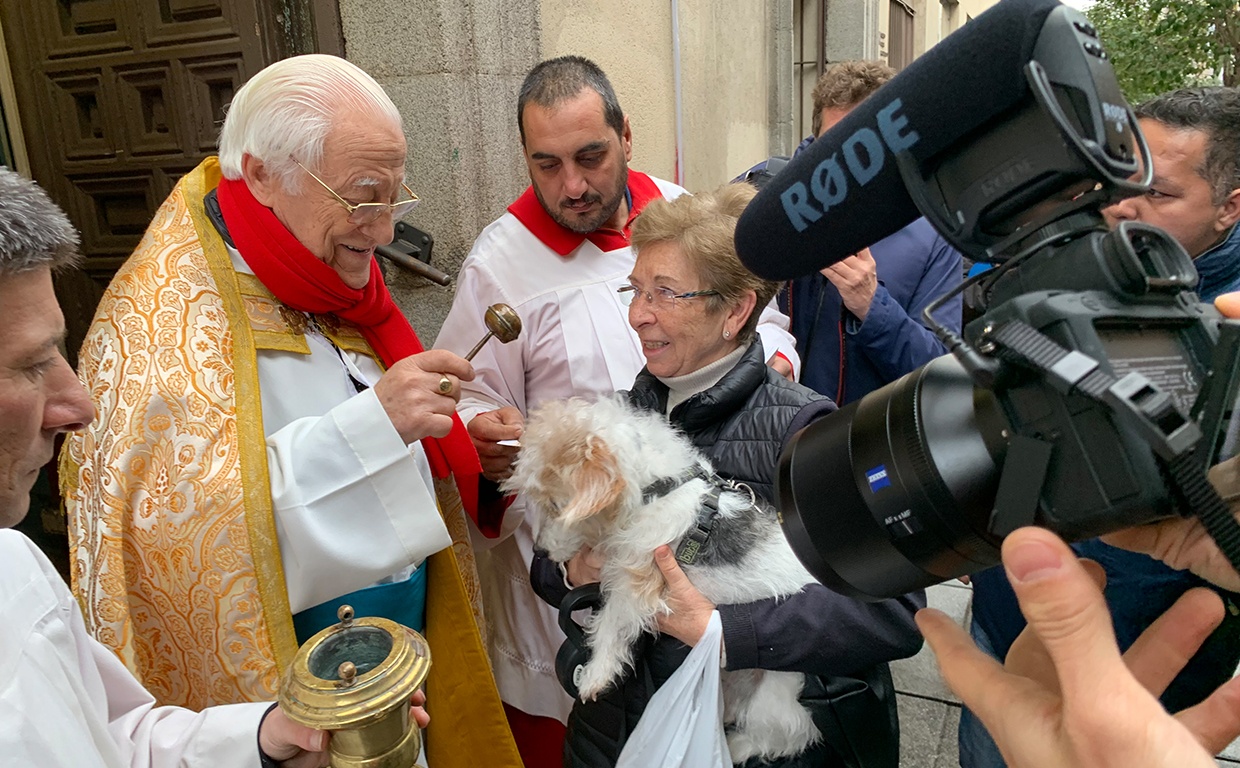
San Antón, patrón de los animales El 17 de enero es el día de San Antonio Abad, conocido como San Antón, patrón de los animales. Este día se celebran en España fiestas en las que los animales son los protagonistas.
Origen de la fiesta San Antón vivió en el siglo III, en el desierto, con animales que le protegían y que él también protegía. Por eso, es su patrón, figura de devoción de los campesinos y, actualmente, de todos los amantes de los animales.
Las Vueltas de San Antón: importante celebración en Madrid y otros lugares Esta fiesta, de origen rural, se celebra sobre todo en Madrid, pero también en otras ciudades españolas. Los animales de compañía (perros, gatos, aves y hasta cerdos) reciben la bendición de San Antón a las puertas de la iglesia dedicada al santo.
Se llaman "vueltas" porque, según la tradición, en el pasado, los devotos del santo daban tres vueltas en torno a la ermita con sus animales, para tener la protección del Santo.
Otros objetivos El objetivo de esta fiesta es además dar a conocer el trabajo de las diferentes asociaciones para defender y promover la adopción de animales, pero también, para ayudar a las personas más necesitadas. La misión de protección del Santo se hace realidad.
Fiesta de Enero en Chiapa de Corzo (January Festival of Chiapa de Corzo)
24.02.2026 19:15The January Festival in Chiapa de Corzo is a vibrant Mexican celebration that blends pre-Hispanic and colonial traditions, featuring colorful dances, traditional costumes, and a spectacular fireworks show on the Grijalva River.
The January Festival in Chiapa de Corzo is one of the most emblematic celebrations in Mexico and takes place between January 8 and 23. It is a very colorful and joyful festival in which all the inhabitants of the city participate, from the youngest to the oldest.
The festival is a mixture of pre-Hispanic and colonial traditions and has its origin in a legend. In the 18th century, Doña María de Angulo, a very wealthy Spanish woman, arrived from Guatemala to Chiapa de Corzo, a town famous for its sorcerers and natural remedies, to cure her sick son. A man recommended bathing the child three times in a thermal spring; Doña María did so, and her son recovered. Grateful, she ordered her servants to go with baskets full of food for the inhabitants of the town. And they, to thank her for these delicacies, danced for the boy. From this comes the name of the main participants in the festival, the “parachicos.”
The first day of the festival is dedicated to the servants, called chuntas, who arrived in the town with food. It is called the Announcement of the Chuntas: men dress up as women and come with baskets of fruit, vegetables, and other foods. Two days later, on January 10, the town fills with parachicos: men dressed in colorful costumes, with wooden masks on their faces and headdresses on their heads. They walk through the streets of the town, dancing and playing the chinchín.
And finally, on January 22, the Naval Battle takes place, a nighttime spectacle on the Grijalva River. In it, a 15th-century battle is symbolically recreated with lights, music, and fireworks.
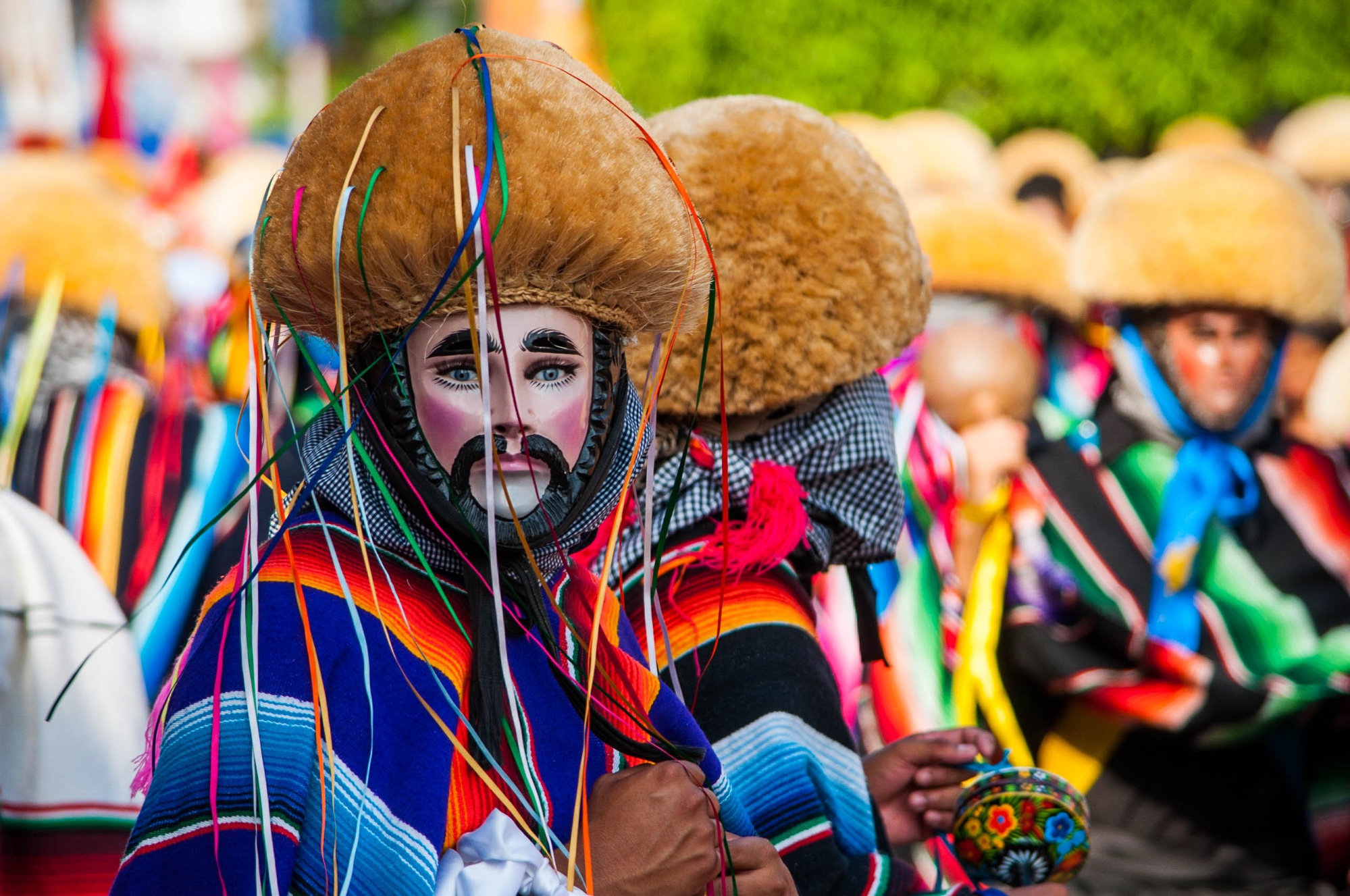
La Fiesta de Enero en Chiapa de Corzo es una de las celebraciones más emblemáticas de México y tiene lugar entre el 8 y el 23 de enero. Es una fiesta muy colorida y alegre, en la que participan todos los habitantes de la ciudad, desde los más pequeños hasta los más ancianos. La fiesta es una mezcla de tradiciones prehispánicas y coloniales y tiene su origen en una leyenda. En el siglo XVIII, doña María de Angulo, una española muy rica, llegó desde Guatemala a Chiapa de Corzo, un pueblo famoso por sus brujos y sus remedios naturales, para curar a su hijo enfermo. Un señor le recomendó bañar al niño tres veces en una fuente termal; doña María lo hizo y su hijo se curó. Agradecida, mandó a sus sirvientas ir con cestas llenas de comida para los habitantes del pueblo. Y ellos, para darle las gracias por estas delicias, bailaron para el chico. De ahí toman su nombre los participantes principales de la fiesta, los "parachicos". El primer día de la fiesta está dedicado a las sirvientas, llamadas chuntas, que llegaron al pueblo con comida. Es el llamado Anuncio de las Chuntas: los hombres se disfrazan de mujeres y vienen con cestas de fruta, verduras y otros alimentos. Dos días después, el 10 de enero, el pueblo se llena de parachicos: hombres vestidos con trajes coloridos, con máscaras de madera en la cara y monteras en la cabeza. Recorren las calles del pueblo, bailando y tocando el chinchín. Y, por fin, el 22 de enero tiene lugar la Batalla Naval, un espectáculo nocturno en el río Grijalva. En él se recrea simbólicamente, con luces, música y fuegos artificiales, una batalla del siglo XV.
Nauczyciel prowadzący: Kamila Życzkowska-Kolenkiewicz
Bloger: Miłosz Kalinowski


